
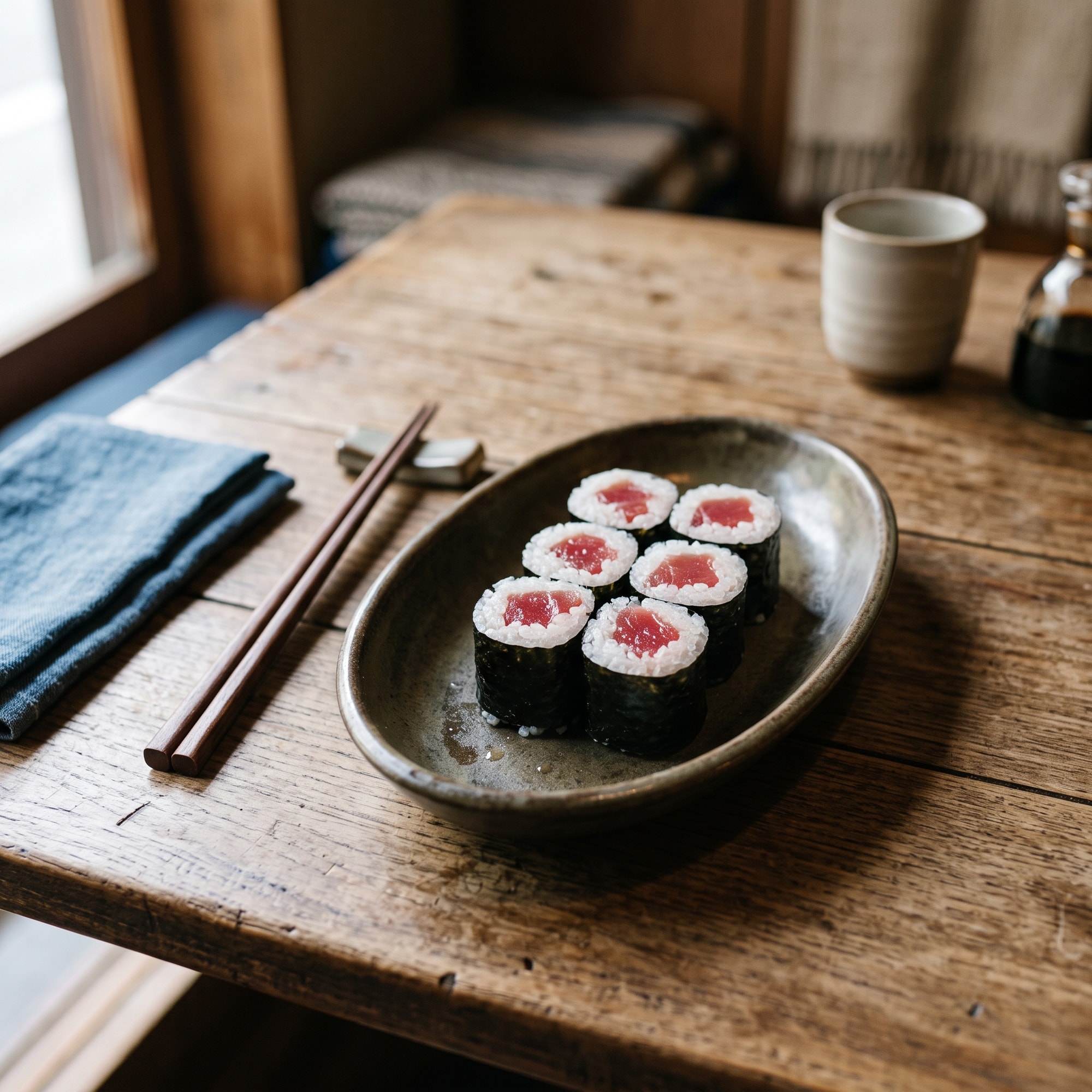
Tekka Maki
When the season turns cold, maguro is at its leanest and cleanest. These rolls let the fish speak — rice, nori, a single line of tuna, nothing else.
9 ingredients
Ingredients
- 11 1/2 cup short-grain Japanese rice
- 21 1/2 cup water
- 32 tbsp rice vinegar
- 41 tbsp sugar
- 51/2 tsp salt
- 6120 g sashimi-grade tuna, cut into 1/2-inch strips
- 74 toasted nori sheets, halved crosswise
- 8soy sauce, for serving
- 9wasabi paste, for serving
10 steps
Preparation Steps
- 1
Rinse the rice under cold water until the water runs nearly clear — three or four changes usually does it. Combine with the measured water in a heavy pot, cover, and bring to a boil over medium heat. Reduce to the lowest flame and cook 15 minutes, then kill the heat and let it sit covered 10 minutes more. Resist the urge to lift the lid during cooking; the steam does work you cannot replace.
- 2
While the rice rests, dissolve the sugar and salt in the rice vinegar by stirring — a brief warm-through in the microwave helps, but do not boil it. Transfer the hot rice to a wide wooden bowl or baking dish and pour the vinegar mixture over the surface in a slow drizzle.
- 3
Cut through the rice with a shamoji or spatula at a shallow angle, folding rather than mashing, until each grain is coated and glossy. Fan the rice as you fold — this rapid cooling builds the surface sheen that distinguishes proper sushi rice. Let it cool to body temperature, then cover with a damp cloth so it never dries out.
- 4
Lay a half-sheet of nori, shiny side down, across the bamboo makisu. With wet fingers, spread about 3/4 cup of rice evenly, leaving a 3/4-inch strip of bare nori along the top edge. Press gently — compacting the rice too hard makes the roll dense and unpleasant.
- 5
Arrange one strip of tuna in a single horizontal line about one inch from the bottom edge of the rice. A thin smear of wasabi directly on the rice beneath the fish is traditional if you want the heat, but keep it light — it should not dominate.
- 6
Lift the near edge of the mat with your thumbs, holding the filling in place with your fingertips, and fold it over until the rice meets rice on the other side of the filling. Give the mat a firm but gentle squeeze to shape the roll into a square or round profile.
- 7
Lift the mat, rotate the roll forward so the bare nori strip seals the seam, and give one more shaping press. The moisture from the rice seals the nori on contact; if the seam will not hold, a single grain of rice pressed along the strip acts as glue.
- 8
Rest the roll seam-side down for a minute before cutting. Wipe a sharp knife with a damp cloth between each cut — a dry blade drags and tears the nori. Cut each roll in half, then align the halves and cut into six equal pieces.
- 9
Serve at room temperature with soy sauce for dipping and a small dab of wasabi. Sushi rice held too long or refrigerated loses its texture; eat within an hour of rolling.
- 10
Arrange the pieces cut-face up so the tuna shows clean against the white rice. This is a dish of balance, not abundance — two rolls per person with soup and a side is a complete meal.
AI estimated
Nutrition
Calories
415
kcal
Protein
18
g
Carbs
78
g
Fat
2
g
Fiber
2
g
Sugar
5
g
Sodium
450
mg
Tried it?
Rate & review
How was it?
No responses yet — be the first.